
VA and DOJ Launch Guardianship and Conservatorship Initiative for Veterans: What It Means and Why It Matters

Updated: Jun 1
The VA states that the initiative is meant to help veterans who are stuck in hospitals because they lack a legally recognized decision-maker. Without a guardian or conservator, healthcare providers may not be able to authorize long-term care placement, treatment decisions, or housing transitions.
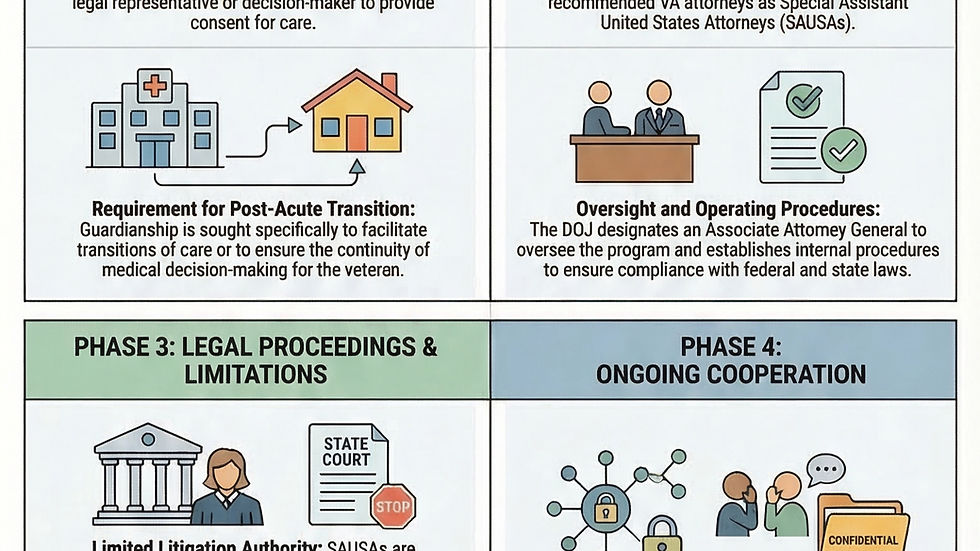
The VA’s announcement explains that allowing attorneys to help initiate guardianship proceedings may prevent prolonged hospitalization and help vulnerable veterans access the care and services they need. The Attorney General is empowered to appoint Special Assistant U.S. Attorneys with "limited litigation authority" in guardianship or conservatorship proceedings. The appointments are limited to one year in length, subject to renewal.
Secretary of Veterans Affairs Doug Collins and Attorney General Pam Bondi signed the agreement on March 4 that outlines the requirements of the VA, DOJ, and attorneys involved. Below is a simplified breakdown of the procedures outlined in the memorandum.
Understanding Guardianship and Conservatorship
Understanding the legal implications of this policy requires understanding what guardianship and conservatorship actually are.
Under U.S. law, guardianship is a court-ordered relationship in which another person is granted authority to make decisions for someone who cannot safely make those decisions themselves. The Cornell Legal Information Institute explains that guardians typically assume responsibility for personal, medical, or residential decisions on behalf of the person placed under guardianship.
A closely related concept is conservatorship, which generally involves court supervision of financial and legal affairs. Conservators may be appointed to manage the finances or property of a person who cannot manage those matters themselves. Each state has laws governing guardianship and conservatorship.
These proceedings take place in state courts, and a judge must determine that the person lacks sufficient capacity to manage their own affairs before a guardian or conservator can be appointed.
Importantly, the new VA-DOJ agreement does not automatically place veterans under guardianship. Instead, it allows attorneys to participate in the legal process by filing or supporting petitions in state court.
Legal Ramifications for Veterans
Guardianship proceedings can have significant legal consequences.
The DOJ’s Elder Justice Initiative says a guardianship may transfer major decision-making authority from the individual to a court-appointed guardian. Depending on the court’s order, the guardian may gain authority over issues including medical treatment decisions, living arrangements, financial management, and legal decisions.
Because these proceedings can restrict fundamental rights, courts must follow strict due-process protections. These protections typically include notice of the petition, the right to a hearing, the right to legal representation, the ability to present evidence and challenge testimony, and the ability to appeal a decision.
Modern guardianship law also increasingly favors limited guardianship, meaning courts should only remove decision-making authority in areas where the individual truly cannot make safe decisions.
Advocacy organizations emphasize that these protections are especially important when the government is involved in initiating guardianship petitions.
Concerns from Advocates
Advocates for veterans and civil liberties argue that guardianship should always be considered a last resort.
The National Coalition for Homeless Veterans (NCHV) said that while guardianship can sometimes help veterans access care, it can also limit personal autonomy and should only be used when less restrictive alternatives are unavailable. The organization warned that guardianship and other involuntary interventions can significantly limit a person's independence and must be used cautiously. NCHV was not outwardly opposed to the policy but emphasized the importance of oversight and coordination with community outreach groups.
Similarly, Disabled American Veterans only recently became aware of the memorandum and is in the process of analyzing its contents. Senator Richard Blumenthal (D-CT), the ranking member on the Senate's Veterans' Affairs Committee, expressed concern about implementing the policy without congressional review.
These concerns highlight a broader legal debate: how to balance protecting vulnerable individuals with preserving their civil rights and independence.
The Bigger Picture for Veterans and Families
The VA-DOJ guardianship initiative illustrates the difficult policy challenge facing the veteran healthcare system.
Some veterans lack the capacity to make critical medical decisions and do not have family members or legal representatives available to assist them. Without a legally recognized decision-maker, these veterans may remain hospitalized or unable to access necessary services.
At the same time, guardianship and conservatorship are two of the most powerful legal tools a court can impose because they can limit personal autonomy and transfer significant decision-making authority to another person.
The key question moving forward will be how courts, advocates, and government agencies ensure that the new policy is utilized only when necessary and with strong legal safeguards.
Final Takeaway
The VA-DOJ agreement provides a pathway to help veterans in need throughout the country who do not have the capacity to make decisions for themselves. However, legal decisions surrounding healthcare and capacity can have profound consequences and will require due care by all involved parties.
Guardianship and conservatorship can help ensure that vulnerable veterans receive care and support. But guardianship and conservatorship also affect fundamental rights, so each case must be evaluated carefully, with full due process and proper oversight.
Understanding both the benefits and legal implications of guardianship will be critical as this policy develops and as courts begin to see cases under the new agreement.
The Importance of Community Support
Community support plays a vital role in the lives of veterans. It can provide the necessary resources and connections that help them navigate complex systems. Many veterans face challenges that can feel overwhelming. Support from local organizations can bridge gaps in care and provide essential services.
Organizations dedicated to assisting veterans can offer guidance on how to access benefits. They can also help with legal matters, including guardianship and conservatorship. This support is crucial for ensuring that veterans receive the care they deserve.
By fostering a strong community network, we can help veterans transition more smoothly into the care they need. This collaborative approach can lead to better outcomes for those who have served our country.
Moving Forward Together
As we look ahead, it’s essential to keep the lines of communication open. Veterans, advocates, and government agencies must work together. This collaboration can lead to improved policies and better care for veterans.
We must ensure that the rights of veterans are protected while also providing the necessary support. By doing so, we can create a system that truly serves those who have served us.
The VA-DOJ agreement is a step in the right direction. It highlights the need for careful consideration when making legal decisions for vulnerable veterans. As this policy unfolds, ongoing dialogue will be key to its success.
In conclusion, the journey toward better care for veterans is ongoing. With community support and collaboration, we can make meaningful strides in ensuring that all veterans receive the care and respect they deserve.


Comments